✅Quick Answer
How Can You Reduce Cat Shedding?
The best way to reduce cat shedding is to manage loose fur, because normal shedding can’t be switched off. Brush for your cat’s coat type, check the diet, keep parasite control current, and keep their environment calm. Then clean up the fur that has already fallen. Bald patches, sores, or constant licking are not normal shedding and need a vet.
If you searched how to stop a cat from shedding completely, here is the honest answer: you can’t. Shedding is how a coat replaces itself, the same way human hair does. What you can change is how much of that hair ends up on your furniture, your clothes, and (ahem!) inside your or your cat’s stomach.
In my house, Simba’s dense short coat leaves a fine layer of stiff hairs on every fabric he touches, while Billu’s finer, longer coat drifts around in tufts. Both of them have white and ginger fur, while most of my t-shirts used to be black or navy blue. I learned that the hard way. Now that I’ve accepted there is absolutely nothing I can do to stop them from shedding, I’ve switched to white or whitish t-shirts.
Which tool you buy matters less than using it gently and consistently, and Simba and Billu showed me that what suits one cat can annoy the other. This article covers the bigger plan.
How to Reduce Cat Shedding: 5 Practical Ways
1. Brush for Your Cat’s Coat
Brushing removes hair that is already loose. It doesn’t slow how fast new hair grows. ASPCA and VCA guidance supports a rough baseline for how often to brush a cat: once or twice a week for many short-haired cats, and daily for long-haired or tangle-prone coats. These are veterinary recommendations, not trial-tested schedules, so adjust to your cat’s tolerance.
Use gentle pressure, never pull through a mat, and judge success by coat and skin, not by the size of the pile. Brushing also means less swallowed hair, which Cornell links to fewer hairballs.
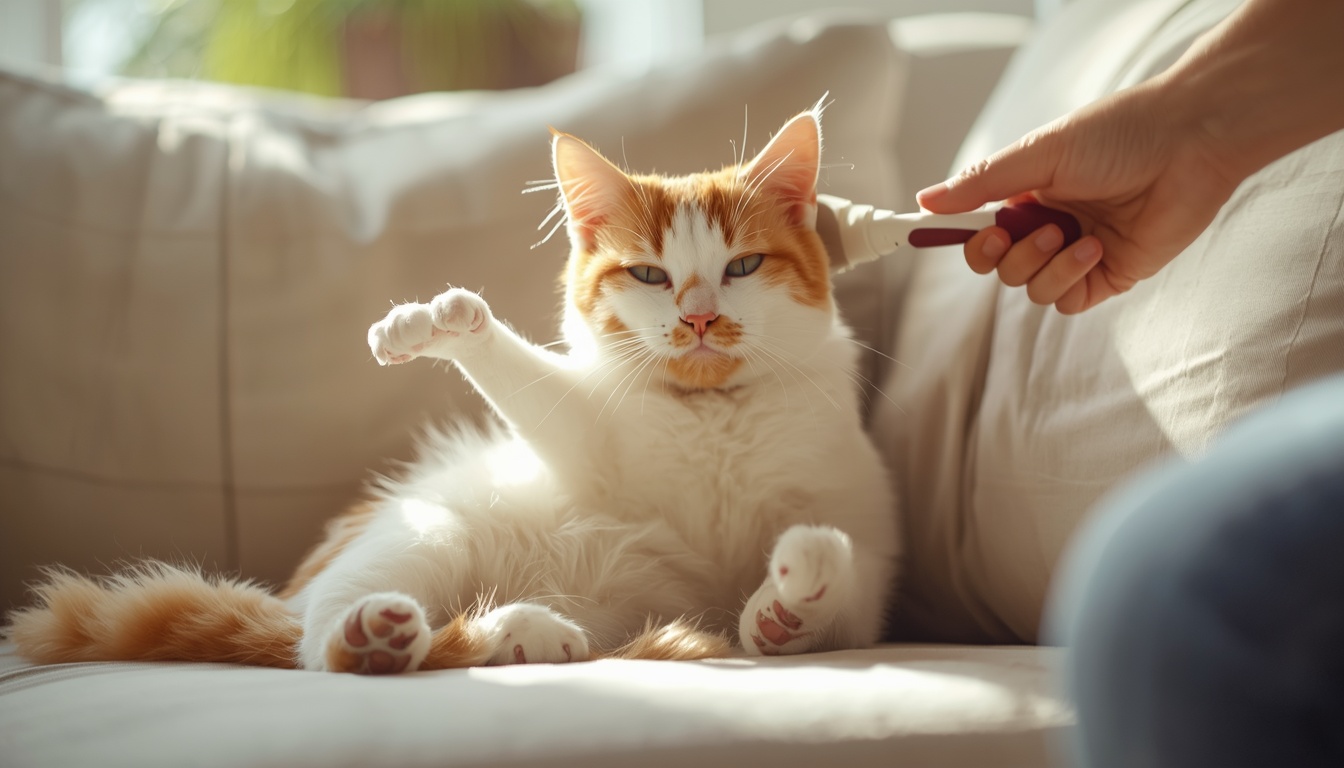
A little tip from home: When it comes to brushing Billu, I pat her first and offer her a treat to help her feel comfortable on my lap. Once she’s settled, I gently brush away the loose hair. I avoid pressing the brush too hard because I value my peaceful relationship with her!
2. Check the Diet Before Changing It
VCA’s veterinary guidance notes that inadequate nutrition can harm coat condition and contribute to shedding. Check that your cat’s food is complete and balanced for their life stage before changing the diet.
That is not the same as saying that premium food automatically reduces shedding. For a cat already eating a nutritionally adequate diet, there is insufficient evidence to promise that switching to a more expensive food will reduce normal shedding.
3. Keep Parasite Control Current
Fleas and mites can cause itching, and cats may lick, chew, or scratch enough to break or pull out their hair. If you notice persistent scratching, bald patches, scabs, or irritated skin, don’t assume you’re seeing ordinary seasonal shedding. It could be a sign of a skin problem or parasite infestation.
Ask your veterinarian which flea and mite prevention is appropriate for your cat’s age, weight, health, and lifestyle. Never combine parasite treatments or use products intended for dogs on your cat unless your veterinarian specifically confirms they are safe. Some dog flea products contain ingredients that are highly toxic to cats.
4. Keep the Environment Predictable
Stable routines, hiding spots, elevated resting places, and regular play can help reduce stress-related overgrooming. However, excessive licking can also signal pain, allergies, parasites, or other medical problems. As Cornell Feline Health Center explains, environmental and seasonal changes should follow an evaluation of possible medical causes, not replace it.
What helped Billu: I paid attention to her comfort areas at home. We rearranged some furniture and moved her feeding equipment away from a corner near the TV. The change seemed to help her feel more comfortable. Small adjustments to a cat’s surroundings may make a difference, especially when noise or an exposed feeding spot adds to their stress.
5. Clean Up the Fur Already Shed
Vacuum your cat’s favorite resting spots, cover furniture with washable throws, and keep a lint roller handy. These steps won’t reduce shedding itself, but they can make loose fur easier to manage around the house.
One thing many pet owners overlook is tracking how much fur their pets actually shed. Instead of vacuuming or cleaning on a rigid schedule, pay attention to how quickly fur builds up on floors, furniture, and bedding. Adjust your cleaning routine accordingly.
A practical tip: Notice a sudden increase in shedding, bald patches, or changes in your cat’s skin? Don’t treat it as a cleaning problem alone. These changes may warrant a veterinary check.

How often you brush depends on the coat. My guide on how often to brush a cat has a schedule by coat type.
Why Is My Cat Shedding So Much? Normal vs. Hair Loss

Make sure it is shedding you are dealing with. Normal shedding replaces hair. Alopecia means an abnormally thin coat, and it can come from hair falling out or from a cat licking and chewing it away. A veterinary dermatology review treats these as different problems.
See a Vet If You Notice:
- Bald patches, thinning areas, or short, broken “stubble”.
- Redness, sores, crusts, or heavy scaling.
- Persistent licking, chewing, or scratching.
- A sudden change from your cat’s usual pattern.
- A newly unkempt or matted coat, especially in an older or overweight cat, because difficulty grooming can look like heavier shedding.
Indoor cats often shed all year because of steady indoor light and temperature, and seasonal peaks vary by cat. So heavy shedding alone isn’t a diagnosis. A sharp change from your cat’s usual pattern is the thing to watch for.
Don’t automatically assume that stress is the only cause either. In a study of 21 cats referred for presumed psychogenic hair loss, 16 had medical causes alone, 2 had behavioral causes alone, and 3 had both. It was a small referral sample, so it says nothing about how common each cause is overall. It does, however, show why a medical check should come first.
Do Baths, Fish Oil, Water, or Shaving Reduce Shedding?
Treat these with caution:
- Baths: Most healthy adult cats don’t need them. They suit dirt, impaired grooming, or a vet-prescribed skin treatment.
- Fish oil: Owners report mixed results. A safety review of omega-3s discusses possible gastrointestinal effects, altered platelet function, weight gain, and interactions, and a veterinary nutrition article notes that therapeutic data in cats are scarce. Ask your vet first, and skip generic doses from blogs.
- Water and wet food: Good general care, but there is no solid evidence that they reduce normal shedding.
- Shaving: This can suit severe matting, but it doesn’t stop shedding. Check with a vet or groomer first.
What Cat Owners Say About Shedding
Four recurring concerns from Reddit discussions
1. The goal is less hair around the house
“Please give me all your shedding hacks/must have items to reduce the cat hair in your home. I feel like I’m constantly seeing hair fly everywhere. Lol”
2. Heavy shedding can leave owners wondering what is normal
“I’ve had my tabby 3 year old male for about 3 months now. I adopted him and we are heading into Australian summer, everytime I brush him with a finer toothed brush this much comes out twice a day. He’s a shorter hair tabby, my last boi was long hair and I don’t remember him ever shedding this much.”
3. Some cats simply won’t tolerate grooming tools
“He HATES any type of grooming brush or grooming gloves. He will wiggle his way out, maybe tolerate a couple of brushes before running away and glaring at me from a distance.”
4. Removing more fur isn’t always the only concern
“I have accidentally discovered my cat somewhat tolerates rough pats with latex gloves, and I can convince him to come back when there’s treats involved. As soon as he asks to leave by scratching at the door then we’re done. A lot of fur comes off with this technique, especially with a tail to head scratch. I just worry it could be painful for him?”
Questions Cat Parents Frequently Ask About Cat Shedding
No. Shedding is normal hair replacement. You can only manage the loose fur.
Once or twice a week for many short-haired cats and daily for long-haired ones, adjusted to your cat’s comfort.
Often, yes. The pile is loose hair that was ready to fall, now collected in the brush instead of on your sofa. A big pile alone isn’t a diagnosis. Look at the skin and coat instead: thinning areas, bald patches, redness, or scabs mean a vet visit. Owners ask this constantly, for example in this r/catcare thread.
Make it feel less like grooming. Try a glove or silicone brush that feels like petting, keep sessions to a couple of minutes, work on one area at a time, and offer a treat afterward. Never force it. If a cat that used to tolerate brushing suddenly resists, mention it to your vet, since pain or irritated skin can make touch unpleasant. You can follow how I get Billu to feel comfortable with brushing, as I have mentioned above.
They can be, when used occasionally and gently on a cat with a suitable dense undercoat. Overuse can remove too much coat and irritate the skin, so use light pressure, avoid repeating strokes on one spot, follow the manufacturer’s instructions, and stop if your cat tenses or pulls away. Owners’ experiences are mixed, so treat any tool as something to trial and observe, not a guaranteed fix.
Not reliably. A veterinary clinic network, PetNation, notes that coat length doesn’t always predict how much a cat sheds. Double-coated breeds such as Maine Coons and Siberians tend to shed heavily during seasonal transitions, while short, fine hair is less visible on furniture even when the volume is substantial. Owners say the same in Reddit threads, with short coats leaving fine hairs everywhere and long coats forming clumps and mats. That’s a clinic article and owner reports, not a controlled comparison. I can tell you from my experience that, both Billu and Simba shed hair equally in proportion to how much hair they have.
Spring is usually the heaviest, as cats lose their winter undercoat, and fall is typically milder, according to PetNation. It also says daylight hours, not temperature, drive the change, and the period can last from weeks to months. Indoor cats can shed all year. For a season-by-season brushing plan, see the calendar in my brush guide.
No. Shaving can suit severe matting, but it doesn’t stop shedding, because the coat keeps replacing itself. Check with a vet or groomer first.
Nothing stops normal shedding. Start by checking that the food is complete and balanced for your cat’s life stage. Owners report mixed results with fish oil and therapeutic data in cats are scarce, so ask your vet before adding it.
Gentle regular brushing, a complete and balanced diet, current parasite control, and a calm, predictable home are the steps with veterinary support. If the shedding comes with bald patches, sores, or constant licking, skip home remedies and see a vet.

About the Author: Shafiqul Islam
Shafiqul Islam is the Founder & Editor of PetSpecial, an educator, and a devoted pet parent to his cats, Billu and Simba. Passionate about pet care, he created PetSpecial to help fellow pet parents find clear, practical, and trustworthy answers to everyday questions about their animals. His articles draw on personal experience where relevant, peer-reviewed scientific studies, and reliable veterinary sources to separate evidence-based guidance from unsupported claims and marketing hype.
Want to know more about Shafiqul and why he created PetSpecial? Visit the About Us page.