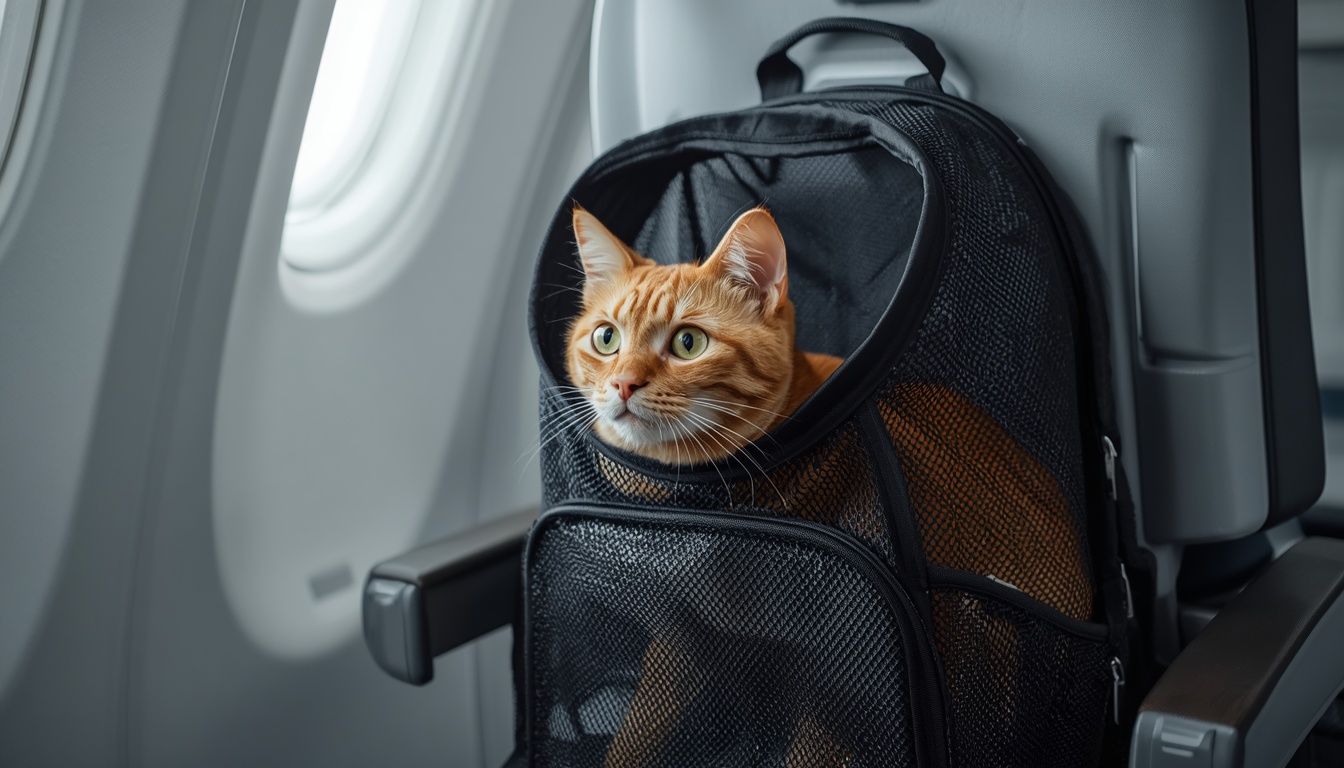
As a pet parent, nothing causes a Himalaya-like spike in your stress level than when TSA agents check your pet’s carrier. If you have relied on search results to reduce your anxiety by looking for “airline approved” or “designed to fit under most seats” tags, you are definitely not alone.
Meet me, the proud parent of Billu and Simba. Back in 2021, when I first became a cat dad, I had close to zero knowledge about the hidden traps of in-cabin pet transit. Years of handling my two distinct cats forced a hard spatial reality check. Simba thrives on a clear, front-row view of his surroundings, but Billu is a timid Turkish breed who panics around strange crowds and loud airport terminal noises.
Sizing Up In-Cabin Pet Travel

As an academic researcher who evaluates pet gear through strict data verification, I will tell you plainly: those retail stamps are complete marketing fiction. The dimensions printed on a manufacturer’s box carry zero weight at the boarding gate. Ultimate authority over your journey rests entirely with individual crew members and the non-negotiable floor space of your specific aircraft model.
Forcing a noise-sensitive cat into a cramped economy row inside a rigid, fully transparent plastic bubble backpack strips away her ability to flee, violating baseline feline confinement instincts and triggering intense stress. For a cat like Billu, an enclosed mesh layout with a roll-down privacy flap is a psychological necessity, not a style choice.
While roll-down privacy flaps are great, the ambient light inside airport terminals can still leave a carrier’s interior too bright for a highly anxious pet. A simple real-world workaround is to pack a lightweight baby blanket or towel inside your carry-on luggage. Draping this over the mesh panels during long gate waits creates total darkness, completely blocking out external visual triggers. I look at the evidence behind this in should I cover my cat carrier.
Yet, even if a carrier matches your cat’s temperament, it must still bypass structural cabin realities. If a backpack frame is too rigid to compress sideways under the seat, or if your cat cannot comfortably stand up and turn around inside, you risk facing last-minute rejections or denied boarding.
Let’s look past the marketing copy and break down the real-world under-seat configurations, hidden seat obstructions, and TSA security screening steps you actually need to clear the gate safely. The TSA screening window is particularly stressful for cats, especially those that are like my cat Billu who gets scared when she hears outside noise. So, completing the TSA screening with your cats in one hand and bags in the other can be really difficult unless the TSA cat airport security guide that is designed to reduce your stress.
Mainline vs. Regional: The Under-Seat Dimension Matrix
Before booking a flight, you must realize that airlines publish carrier size recommendations or maximum limits, not a guaranteed measurement of unobstructed floor space by aircraft, row, and seat position (Delta, United). A seat-by-seat clearance dataset is rarely shared, and a variance of just one inch can disrupt your entire travel plan.
Published In-Cabin Pet-Carrier Dimensions (Not Guaranteed) Under-Seat Clearance
All dimensions are normalized to Height × Width × Depth in inches, where Depth corresponds to the carrier’s stowed length.
| Airline | Published Carrier Limits (H × W × D) | Reliability of Data | Real-World Aircraft & Row Exclusions |
|---|---|---|---|
| Delta | 11 × 11 × 18 in | General recommended baseline [1] | Under-seat space varies heavily by aircraft; bulkhead rows, emergency exit rows, flat-bed rows, and rows 46–51 on the A330-200 are strictly excluded [1]. |
| United | 11 × 11 × 18 in | Mainline ceiling [2] | Boeing 737 MAX flights drop the vertical height ceiling to 10 inches max. Economy pets on 737-800/MAX 8 variants are restricted to aisle or window rows [2]. |
| American | 11 × 11 × 18 in | Mainline standard [3] | Severe regional fleet drops: Mainline flights allow 19-inch depth hard cases, but regional American Eagle segments restrict hard shells to a tight 8 × 12 × 16 inches [3]. |
| Southwest | 10 × 10.5 × 18 in | Strict 2026 Shift [4] | Outdated pet blogs still repeat obsolete 8.5-inch parameters, but Southwest’s official ceiling for third-party carriers is currently 10 inches high [4]. Specific aisle seats feature narrower clearance. |
| JetBlue | 8.5 × 12.5 × 17 in | Hard global limit [5] | Excludes Mint suites, bulkheads, and exit rows [5]. Enforces a strict visual check: your cat must be able to stand up, turn around, and move with ease when the carrier is zipped [5]. |
| Spirit | Not Applicable | Ceased Operations [6] | Critical 2026 System Check: Spirit Airlines officially ceased all flight operations on May 2, 2026, during bankruptcy liquidation [6]. Retained in lists strictly as historical text to flag outdated web entries. |
[1] Delta Policy Overview [2] United Pet Travel [3] American Special Assistance [4] Southwest Help Center [5] JetBlue Guidelines [6] CNN Liquidation Archive
🔍 Fact-Check Your Specific Flight
Important Verification Step: Because under-seat clearance and row exclusions are tied entirely to the specific aircraft frame deployed for your flight route, always verify your configuration before heading to the gate. You can cross-reference your itinerary’s exact sizing limits directly via the official airline policy dashboards:
The “Pet Choice Paradox” & Structural Squeezing Mechanics
This brings us directly to the Pet Choice Paradox, an operational conflict where a carrier physically slides under the seat space, but a crew member flags it as non-compliant because the cat cannot humanely stand up, lie down, or turn around inside the zipped configuration (Jetblue). To avoid this, you have to look at the mathematical reality of required height reduction:

This equation exposes exactly why rigid hard-shell bubble designs (like the Texsens Innovative Traveler or Halinfer Space Capsule) fail completely during commercial flights. Their structural ABS plastic panels cannot yield [thesprucepets]. If a carrier measures 16.5 inches vertically, it will stick straight out into the aisle, creating a safety hazard that flight attendants cannot allow.
Conversely, soft, flexible convertible mesh frameworks (like the Travel Cat Navigator or Mr. Peanut’s Monterey) are designed to safely tilt and lay horizontally under the seat frame. The flexible rods allow the top edge to bend slightly to accommodate a low clearance. However, a major word of caution: always execute structural compression tests when the carrier is completely empty. Never, under any circumstances, force a backpack frame downward around a live animal.
Beyond the mechanical boundaries of the aircraft cabin, choosing a carrier involves balancing human physical constraints. For travelers navigating joint pain or hypermobility, hauling a traditional hand-held box or a single-shoulder tote through modern airport terminals is an setup for injury. A premium, dual-strap travel backpack changes this equation entirely by shifting the load away from isolated joints and anchoring the weight evenly across the handler’s spine. This structural weight distribution makes backpack-style transport an ergonomic necessity for long transits.
If you need a flexible, convertible frame designed to collapse horizontally under tight rows without crowding your pet, read our hands-on review of the Travel Cat Navigator Carrier Bag inside our comprehensive comparison layout.
Real-World Airflow & Heat Trapping Realitie
If you track real-world travel logs across communities like r/CatAdvice and r/TravelWithPets, an alarming trend pops up regarding those rigid plastic bubble backpacks. Multiple flyers note that even on mild, 72°F days, un-ventilated transparent acrylic windows act like miniature greenhouses under plane AC systems. Solar radiation traps heat inside the capsule incredibly fast, causing anxious cats to pant heavily and face severe respiratory distress. If you are facing a long flight, the community consensus is completely clear: skip the clear plastic bubble aesthetics entirely and stick to a fully ventilated mesh framework to ensure your cat actually gets consistent cabin airflow.
The Hidden Seat Trap: Entertainment Boxes & Footroom Realities

Even if your carrier matches the published dimensions perfectly, you can still get blindsided by the physical infrastructure of the plane. Selecting an aisle seat or a row with retrofitted hardware frequently means your available floor space is cut in half by heavy metal Wi-Fi routing gear or In-Flight Entertainment (IFE) control boxes bolted underneath the chairs in front of you (Southwest).
Furthermore, when a vertical backpack carrier is rotated horizontally to meet cabin constraints, it claims 100% of your footroom. During a long summer journey when the heat rises, sitting for hours with your legs pinned completely to the sides of a wide backpack frame turns an already stressful trip into an incredibly uncomfortable physical experience for both you and your cat.
The stress of wrestling a vertical backpack under a low economy row while a line of a hundred passengers stands behind you in the aisle often triggers immediate panic. To bypass this operational bottleneck, always approach your gate agent prior to boarding and request priority pre-boarding. Getting onto the aircraft early grants you the necessary quiet, un-rushed window to get down on the cabin floor, orient or compress your backpack frame cleanly, and settle your cat into position without being rushed by a crowd.
My advice is simple: avoid the restricted rows explicitly mentioned in airline rule sheets (like rows 54–59 on Delta’s A330-300 or row 13D on American’s A321neo). Always make it a habit to check your exact aircraft configuration map on your airline’s digital platform before selecting a row, or call a ticketing agent directly to confirm your seat’s specific under-seat legroom parameters.
Experienced cat parents traveling across communities like r/CatAdvice and r/TravelWithPets highly recommend a simple, zero-cost trick for long delays. Even premium mesh backpacks let in too much flashing airport light for an anxious pet. Pack a thin, breathable baby blanket or towel inside your carry-on luggage. Draping it completely over the mesh panels during long gate waits blocks out overwhelming visual triggers while maintaining essential cabin airflow, providing a dark, cozy den where they can actually decompress.
The Ultimate TSA Checkpoint Escape Protocol

Airport security checkpoints are the single highest-risk environment for pet travel. A crowded terminal filled with echoey announcements, clattering trays, and heavy foot traffic is a primary trigger for feline panic. If an anxious cat escapes her carrier here, recovery inside a chaotic terminal is an absolute nightmare. To avoid nightmares like this, train your cat weeks in advance so that it can get used to the cat carrier backpack you would be using later.
To ensure a safe, compliant transition through security, follow this strict, hyper-vigilant sequential procedure [jetblue]:
Harness First
Before leaving your vehicle, fit your cat with a secure, non-metallic, escape-proof harness. Keep the harness securely attached to the backpack’s internal safety tether throughout your entire transit through the terminal.
The Private Room Request
When you reach the conveyor line, explicitly request a Private TSA Screening Room from the officers. This avoids having to extract a terrified, squirming cat in the middle of a chaotic, echoing terminal line.
The Secure Split
Hold your cat securely inside the quiet, enclosed private room. A TSA officer will take your empty backpack carrier back out to the main line conveyor to pass through the X-ray machine independently while your pet stays completely isolated from terminal escape risks.
Quiet Zone Reassembly
Once the empty backpack returns from the scanner, re-insert your cat tail-first while still inside the closed room. Re-anchor the internal safety clip to the harness ring, and lock all zipper tracks completely before exiting back into the airport terminal.
To match your cat’s specific measurements to real-world gear profiles, check out our interactive sizing calculator on the 6 best cat carrier backpacks comparison directory.
🙋♂️ Real-World Airline Cat Backpack FAQ
I have hypermobility and traditional side bags cause injuries. Is a cat backpack genuinely better for airport walks?
Can I use a bubble window cat backpack on a commercial flight?
Why did the gate agent reject my carrier if its dimensions perfectly match the website specs?
What happens if my cat backpack is an inch taller than the airline’s published limit?
Which seat position has the most under-seat room for a pet carrier?
Do I really have to extract my terrified cat right at the open security belt line?

About the Author: Shafiqul Islam
Shafiqul Islam is the Founder & Editor of PetSpecial, an educator, and a devoted pet parent to his cats, Billu and Simba. Passionate about pet care, he created PetSpecial to help fellow pet parents find clear, practical, and trustworthy answers to everyday questions about their animals. His articles draw on personal experience where relevant, peer-reviewed scientific studies, and reliable veterinary sources to separate evidence-based guidance from unsupported claims and marketing hype.
Want to know more about Shafiqul and why he created PetSpecial? Visit the About Us page.