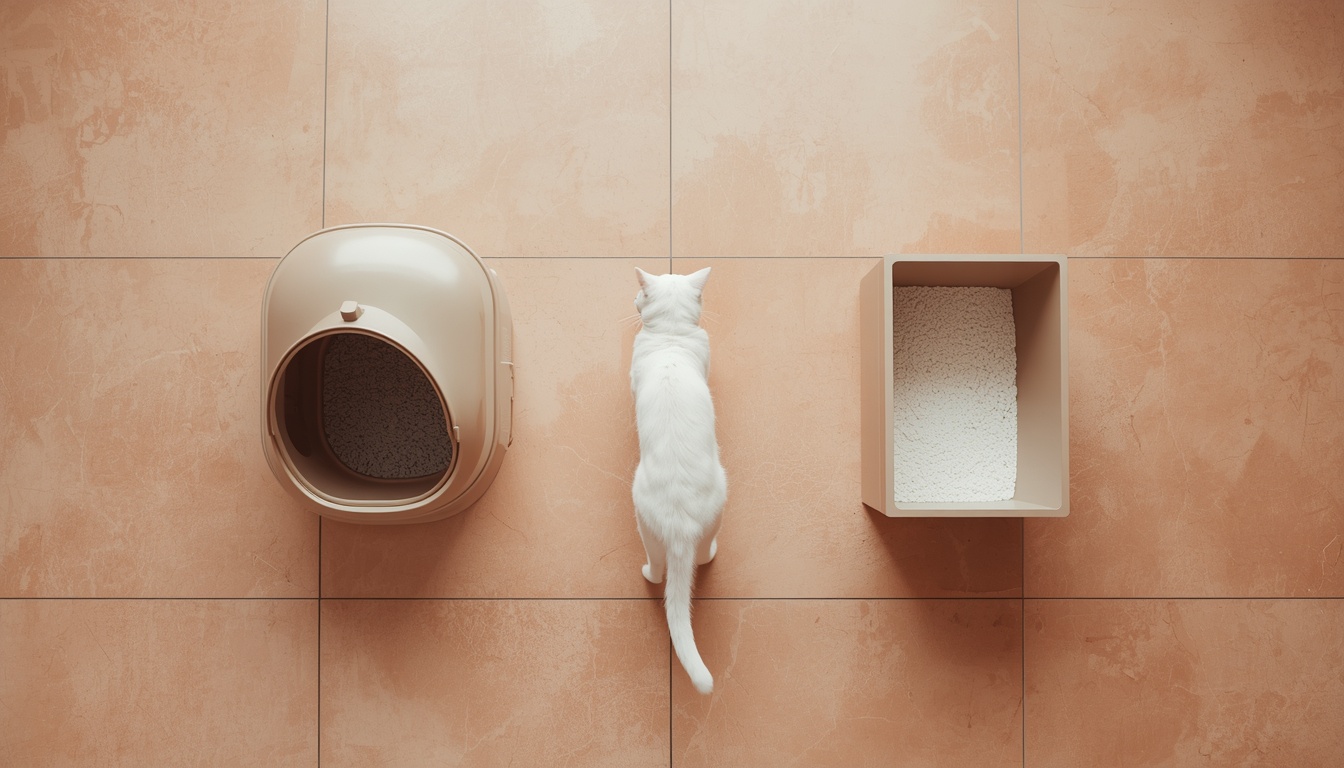
The size of your apartment becomes the biggest issue particularly if you own a cat. Meet my friend Kate. When she moved to her small one-bed apartment with her partner and the third member of the family, Olivia the cat, she wondered where to put a litter box in a small apartment! But if you have more than one cats and if you intend to follow the N+1 litter box rule, the issue becomes bigger than you’d likely anticipate.
The bathroom barely fits you. The bedroom door stays closed at night. Your partner does not want a box beside the sofa. And the only empty closet is where you keep your clothes.

Best Place to Put Litter Boxes in a Studio or One-Bedroom Apartment
Let’s work through the apartment you actually have, not an imaginary home with a spare room waiting for the cats. Let’s find out how best to utilize your small space and give your cats a comfortable living experience.
Start With Doors, Not Empty Corners
Before moving anything, draw a rough floor plan. Mark the current boxes, food bowls, furniture, and doors. Veterinary house-soiling guidelines use floor plans to investigate litter locations, noise, traffic, and possible conflict between cats.
Then add something a normal floor plan leaves out: when those doors close.
A bedroom corner might look perfect at noon and become unavailable at bedtime. A bathroom might accommodate a tray but lose access whenever someone showers.
For each possible spot, ask:
- Can both cats reach it during the day and overnight?
- Does someone routinely shut the door?
- Can I scoop without moving furniture?
- Is the approach quiet, or is it the household’s busiest route?
- Could another cat block the entrance or exit?
These questions turn “there is space here” into “this location might actually work.” Cats need usable routes, not simply boxes that fit between the furniture.
Can Two Litter Boxes Be in the Same Room?
Yes, separate rooms are not a universal requirement. The professional guideline emphasizes sufficient toileting sites in multiple locations, taking the cats’ relationships into account. That leaves room to assess different areas within an open-plan home.
Can You Put Two Litter Boxes Next to Each Other?
From a Reddit owner
“Mine are. The cats have decided one is for peeing. One is for pooping. But they never had an issue with it.”
— u/jackblady, discussing adjacent boxes in r/CatAdvice. This is one household’s experience, not a recommendation for every pair. Read the discussion.
Neighboring trays can certainly get used. However, veterinary guidance says cats perceive adjacent boxes as one large box. They add toileting space at that station without providing the same choice as another location. If the room becomes inaccessible, both trays are affected.
Litter Box Placement in a Studio Apartment

In a studio, investigate quieter areas at different ends of the usable space before putting every tray along one wall. One possible station might be near the sleeping area and another beyond the main seating area, provided neither crowds the feeding space or creates an awkward approach. These are locations to assess, not proven layouts.
The 2024 intercat-tension guidelines recommend distributing resources and using visual barriers. Furniture or a screen may help create separation, but do not turn the approach into a narrow passage where a cat can be cornered. The guidelines do not give us a universal distance in feet between boxes, so there is no need to invent one.
Between the two cats in my household, Simba considers the entire apartment his personal property. Therefore, he guards the feeder bowls and even the litter box area. When we noticed this, we had to go for a mandatory separation of the boxes and placing them in different parts of the apartment.
Where to Put a Litter Box in a One-Bedroom Apartment

A one-bedroom offers more boundaries than a studio, but also more doors that can interrupt access. Compare the likely locations against your actual routine rather than choosing by room name.
Bathroom
Consider the bathroom if the tray fits comfortably and access is reliable. Check the doorway as well as the floor space: owner guidance warns about small rooms where another cat can block entry or prevent escape. If the door regularly closes, another station outside that room may be more useful than a second tray beside the first.
Bedroom
A bedroom may offer a quiet location, but settle the nighttime arrangement first. Privacy, allergies, and sleep preferences may rule it out in your household. Do not plan around leaving the door open if everyone knows it will close at bedtime.
Living Room
Distinguish the busy walkway beside the sofa from an unused section of wall. A visible location can still be worth assessing if it is quiet, away from food and water, and offers an unobstructed approach and exit.
If appearance is the objection, discuss a discreet arrangement that preserves access. If smell is the objection, use the separate guide on how to get rid of litter box smell. Hiding the tray does not address its maintenance.
Closet or Laundry Area
Check what concealment costs. Can the cat enter comfortably? Could another cat occupy the only exit? Can you reach the tray without emptying the closet? In a laundry area, consider sudden appliance noise as well. Restricted escape and noisy surroundings are both concerns in veterinary guidance.
What About a Balcony or Shower?
A Reddit reader’s access question (paraphrased)
An owner considering a balcony box asked what to do when the balcony door needed to close overnight: move the tray indoors each evening or keep it indoors permanently?
The question concerned one cat, but it illustrates a relevant access problem. No successful outcome is claimed here. Read the discussion.
A balcony may have floor space, but a closed door makes its tray unavailable. Balcony safety also needs separate assessment; this is not a recommendation to use one. A shower creates a similar practical complication if the box must move whenever someone bathes. Work through where it goes, when it moves, and what remains available to the cats.
What If You Cannot Fit Another Litter Box?
Another owner’s compromise
“It’s worked better than expected but if i moved into a bigger space I’d probably do three boxes”
— u/thisismyreddit2000, describing two cats with two adjacent boxes. This reports a personal compromise, not proof that it will suit another household. Read the discussion.
For two cats, three boxes are a useful starting recommendation. The professional guideline nevertheless calls the number a rule of thumb, not an absolute requirement. Social relationships and the availability of toileting sites in different places also matter.
Revisit why each location was rejected. Furniture placement or appearance may be negotiable; genuinely inaccessible space may not be. Avoid replacing a comfortably sized box with a cramped tray simply to reach a number, since size matters too.
An automatic box still occupies one location; it does not create another route when that station is unavailable. Equipment choices belong in the litter-box buying guide. Litter choices for several cats are in my guide to the best cat litter for multiple cats. If space constraints remain unresolved, discuss your actual setup with your veterinarian rather than treating another owner’s compromise as a guarantee.
When we got the third litter box, the automatic one, it was a game changer for us. Especially when we had to go out and stay there for long, this litter box came in handy. But since our apartment is relatively bigger than my friend Amber’s, I have to include her experience that is more relevant here. Her two Persian breeds are pretty gentle and are 3 and 3 ½. Since her cats Chico and Taco (funny names, I know!) are quite big, she had to be extra careful with the spacing. So, fitting in the N+1 in her one-bed apartment was a real struggle. But when she got her first self-cleaning litter box, her struggles came to an end.
Once the boxes are placed, watch how each cat uses them. Staring and blocking can indicate tension without a fight. New accidents or avoidance also warrant veterinary assessment, since medical and environmental problems can overlap.
Not sure which box fits your home?
My Odor Fix Finder asks six questions about your cats, your space and how often you can scoop, then works out the minimum box length your largest cat needs.
Try the Odor Fix Finder →Conclusion
When deciding where to put a litter box in a small apartment, check the route as carefully as the available floor space. The most useful arrangement is one your cats can actually use through your normal household routine, not just one that looks tidy on the plan.
References and Further Reading
These sources support the placement principles and supplementary FAQs in this guide. Professional guidelines provide the main framework; owner resources explain practical applications. Reddit comments illustrate individual experiences and are linked alongside the relevant quotations in the article.
- Carney, H. C., et al. (2014). AAFP and ISFM Guidelines for Diagnosing and Solving House-Soiling Behavior in Cats. Journal of Feline Medicine and Surgery, 16(7), 579–598. Professional guidance on litter-box number, size, location, adjacent trays, and assessment of house-soiling.
- Rodan, I., et al. (2024). 2024 AAFP Intercat Tension Guidelines: Recognition, Prevention and Management. Journal of Feline Medicine and Surgery, 26(7). Guidance on resource distribution, visual separation, blocked access, and subtle signs of tension between cats.
- American Association of Feline Practitioners and International Society of Feline Medicine. (2014). Feline House-Soiling: Useful Information for Cat Owners. Journal of Feline Medicine and Surgery, 16(9), 770–771. Owner guidance on accessible locations, avoiding noise, and preventing cats from being cornered near a box.
- International Cat Care. Making Your Home Cat Friendly. Advice on separate resource locations, litter-tray choice, and placement away from potentially threatening windows and external doors.
- American Society for the Prevention of Cruelty to Animals. Litter Box Problems. Owner guidance on location preferences, physical access difficulties, and factors associated with litter-box avoidance.
- Shallowford Animal Hospital. (2023). Can You Move a Cat’s Litter Box? Tips for a Smooth Transition. Practical veterinary advice on gradually relocating a familiar litter box.
More Questions About Litter Box Placement in a Small Apartment
How do I move a litter box without confusing my cat?
If possible, offer a second box in the new location while leaving the familiar one available during the transition. Alternatively, move the existing tray a little at a time rather than relocating it abruptly across the apartment. Watch whether your cat uses the new location comfortably, and speak with your veterinarian if avoidance or accidents develop.
Can I put a litter box on carpet if there is no suitable hard-floor spot?
Carpet does not automatically rule out an otherwise accessible location, but it makes spill protection and cleanup important practical considerations. If you use that spot, place a stable, waterproof protective layer beneath the tray and check underneath it regularly for moisture. If your cat starts toileting on the surrounding carpet, seek veterinary advice rather than assuming floor protection alone will solve it.
How far should a litter box be from food and water in a studio?
The guidance used for this article recommends keeping toileting areas separate from food and water, but it does not establish a universal minimum distance in feet. Use different parts of the room where possible rather than placing bowls directly beside the tray. Assess the feeding, drinking, and toileting locations separately instead of squeezing all three into one pet corner.
Is a spot beside a window or glass balcony door suitable?
Check what your cat can see outside before choosing that spot, especially beside full-length glass. International Cat Care recommends keeping trays away from full-length windows and external doors because these areas can feel threatening to some cats. If the glass exposes your cat to nearby outdoor cats, consider a different location or obscure the lower view with suitable window film.
Can I raise the litter box onto a shelf to save floor space?
Avoid making a jump or climb the only way to reach a litter box, particularly for kittens, senior cats, or cats with mobility limitations. ASPCA guidance notes that physical limitations can make even high-sided or top-entry boxes difficult to use, so an elevated platform adds another access demand. A stable, floor-level station is the more accessible starting point, and any proposed raised arrangement should be discussed with your veterinarian if mobility is a concern.
Does each cat need an assigned litter box?
No, providing multiple boxes does not mean each cat must use a particular tray. International Cat Care explains that the aim is to provide choice, not to make every cat select its own toilet. Observe whether each cat can comfortably use the available stations rather than trying to enforce ownership.
