
Quick Answer: How to Stop One Cat from Eating the Other Cat’s Food
If you’re wondering how to feed two cats separately, there are three basic things you need to manage: when your cat eats, how much they eat, and which cat can access which meal. These are different problems, so they may require different solutions.
Feed the cats in separate rooms or places where they cannot reach each other’s bowls.
Give each cat a measured portion and remove leftovers after the meal so another cat cannot finish them.
If one cat eats much faster, use a slow feeder or keep the cats separated until the slower eater has finished.
If food needs to remain available while you’re away, consider a microchip or RFID feeder that controls which cat can access a particular meal.
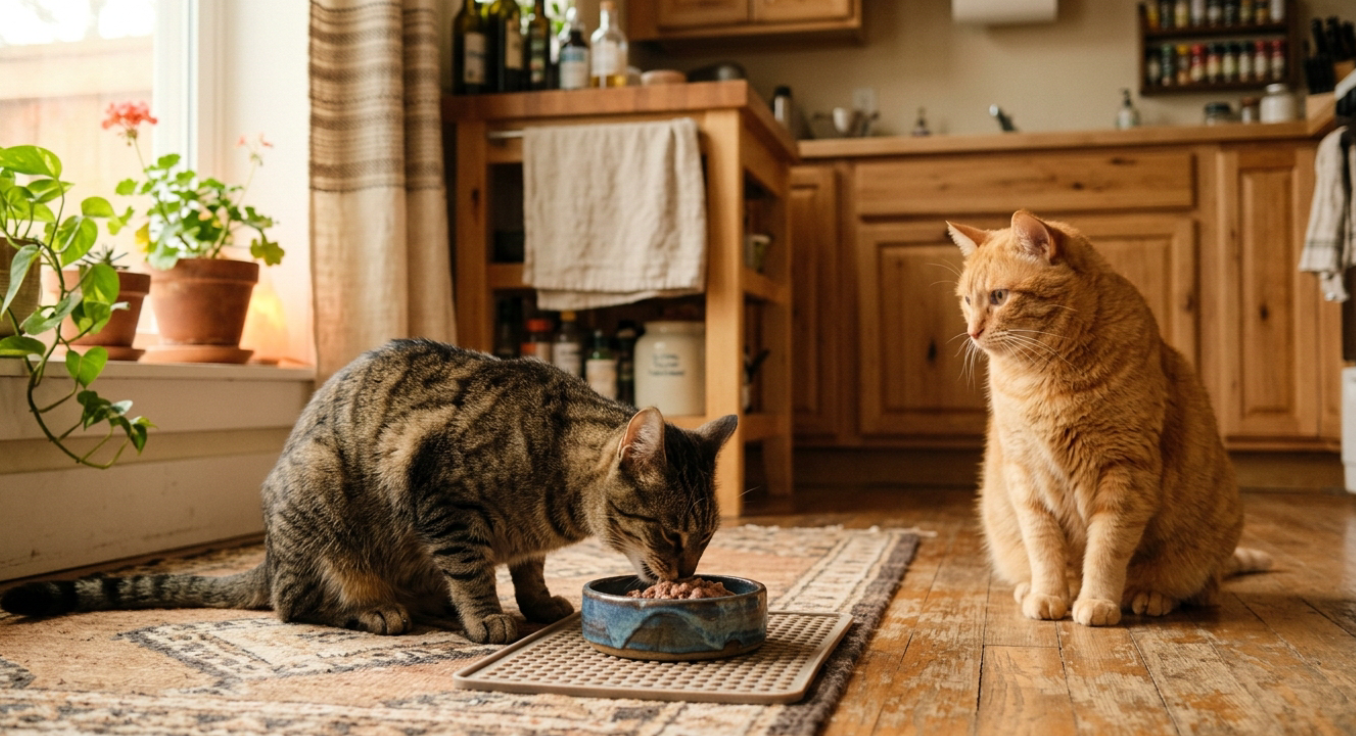
Let me begin with how my cats behave. Simba almost always eats from Billu’s bowl if we forget to apply any of the mechanisms I’m going to discuss below. So, if you’re wondering how to stop one cat from eating the other cat’s food, you first need to understand that it’s not always about how greedy one of your not-so-well-mannered cats is. The underlying problem is that you’ve allowed him to access the other cat’s food. Billu is a slow eater who takes much longer to finish her meal than Simba, who gulps down his entire meal and then chases Billu away from her bowl.
One important piece of advice, however, is that if you notice any drastic change in your cat’s appetite, unusual aggression, or significant weight loss, don’t assume that it’s simply a feeding or behavioral problem. Take your cat to a veterinarian for a checkup.
Why Does My Cat Eat My Other Cat’s Food?
If you are wondering why your cat keeps stealing the other cat’s food and how to feed your two cats separately, you are not alone as a cat parent. Meet me, the proud parent of Billu and Simba. The reason might not be as complicated as you might have thought.
One cat may simply finish eating much faster than the other and discover that there is still food available in the second bowl. Once the cat successfully gets access to that food and if it keeps repeating, the behavior can become a habit. Food left available throughout the day can make the problem even harder to manage.
Cats are inherently inquisitive. Even if you serve them all the same food, they might sneak into other cat’s bowl out of sheer curiosity. Sometimes, the two cats may also have different appetites, portion requirements, or food preferences. And if both cats have unrestricted access to each other’s bowls, there is little stopping one of them from repeatedly helping itself.
This is why I don’t think you should focus only on making the “thief” cat behave differently. The easier solution is often to change the feeding arrangement so that the cat simply cannot access the other cat’s food.
Feed the Cats in Separate Rooms

Before I began PetSpecial or was fully aware of cat behavior, my first instinct was to ask my now-deceased mom, “Ma, feed Simba in the balcony and lock him in while Billu eats in my room.” My mom loved Simba more than Billu, so he got the Prince Charming treatment of having access to the open balcony. The idea was simple: physically separate them while they eat. By keeping the doors closed, they couldn’t see or reach each other’s food, which meant there was no opportunity for stealing.
As I have mentioned earlier, Simba is a quick eater unlike Billu. So, if one of your cats is a fast eater, this method can be particularly helpful. The fast eater can wait in the locked room after finishing his meal, while the slow eater gets enough time to slowly consume what is in her bowl without having to worry about being chased away.
Separate-room feeding can also be useful when the cats need different foods or different portions. Instead of trying to monitor what each cat eats after the food has been served, you control access from the beginning. This is also a commonly recommended approach in veterinary and cat-care guidance, particularly when cats have different dietary needs, feeding habits, or eating speeds.
PetSpecial tip: If separate rooms aren’t practical, start by creating as much physical distance as possible between the feeding places. But remember that simply putting two bowls next to each other does not actually prevent one cat from reaching the other’s food.
Give Each Cat a Measured Portion and Remove Leftovers

Another simple way to prevent one cat from eating the other’s food is to control how much food is available and for how long. Give each cat a measured portion instead of leaving food available indefinitely, and remove whatever remains after the meal. This method is particularly useful when one cat finishes much faster than the other. Once the meal period is over, there is simply no leftover food available for the faster eater to raid. It also makes it easier to keep track of how much each cat is actually eating.
If your household consists of more than one cat, it can be tricky to keep track of all their eating habits: whether each cat has finished its own meal, stolen food from another cat’s bowl, or simply eaten extra food from leftover bowls throughout the day. Measured feeding and removing leftover food after each meal can help prevent one cat from eating another cat’s food and consuming additional calories that may contribute to weight gain.
However, measured portions alone don’t necessarily solve the problem. If Simba finishes his meal in five minutes while Billu is still eating, he can still walk over to her bowl and eat her food. Portion control tells you how much food each cat should receive; it doesn’t necessarily control who gets to eat it.
PetSpecial Pro Tip: If one cat regularly leaves food behind while the other finishes everything in minutes, don’t leave the leftovers unattended. Once the slower eater has had enough time to finish, remove and clean the bowl. This makes it much harder for the faster eater to turn another cat’s leftovers into an extra meal.
If One Cat Eats Much Faster Than the Other
I’ve mentioned before that Simba tends to finish his food much faster than Billu. So, if one of your cats is a fast eater, using a slow feeder can help keep the fast eater occupied while the slower cat finishes her meal.
The other option is to protect the slower eater’s access to her own food. If possible, keep the fast eater separated after he finishes his meal until the slower cat has been given enough time to finish hers. This prevents the faster eater from reaching her bowl and gives the slower eater enough time to finish her meal without being chased away.
The important point here is that you don’t necessarily need to make the slow eater eat faster. Instead, give the slow eater enough time and space to finish her own meal. Our research specifically identifies protecting the slow eater as a practical response to this common fast-eater/slow-eater pattern.
PetSpecial Pro Tip: If your fast eater finishes his meal before the other cat, don’t immediately assume you need a more advanced feeder. A slow feeder for the fast eater, combined with temporary separation, may solve the problem without spending much money.
What If Your Cats Need Different Portions or Different Foods?
If both of your cats eat the same food and the only problem is that one cat eats faster than the other, temporary separation may be enough. However, if they have different dietary needs or their portion sizes vary significantly, you need to make sure that each cat gets its appropriate meal. For example, Billu weighs significantly less than Simba, so she needs fewer calories, while Simba requires a larger portion. Similarly, one cat may need a particular type of food that the other shouldn’t be eating regularly.
In situations like these, simply placing two bowls next to each other isn’t enough. You need to make sure that each cat can access its own food while being prevented from eating the other cat’s meal. This is where feeding in separate rooms becomes particularly useful.
This becomes particularly important when one of your cats is on a restricted or therapeutic diet. Simply giving each cat the correct portion isn’t enough if one of them can simply walk over and eat the other cat’s food. In other words, portion control only works when you can also control who has access to the food. Cats are naturally solitary eaters, and veterinary behaviorists recommend keeping key resources like food physically separated in multi-cat homes.
PetSpecial Pro Tip: If your cats eat different foods, don’t rely on two bowls placed next to each other. Feed them separately and make sure each cat has finished its own meal before giving them unrestricted access to the rest of the house.
Will an Automatic Feeder Stop Cats from Stealing Food?
If you are not home all the time, an automatic feeder can be very helpful. An automatic feeder basically controls when the food is served and how much food is served, if that particular model has that option. Then comes the tricky part. You have to understand that not every automatic feeder is designed to solve the food-stealing problem. Most of these feeders don’t control which cat gets to eat which portion of the food.
This difference is particularly important in a household like mine. If Simba finishes his food before Billu and the feeder simply leaves Billu’s food accessible, he can still walk over to her bowl and help himself. The feeder has successfully dispensed the food, but it hasn’t stopped Simba from accessing it.
So, if you are looking for an automatic feeder to solve the problem, you need to look a little deeper. The number of bowls alone does not fix the problem. You have to ask yourself: Does the feeder actually control which cat has access to the food?

So, before buying an automatic feeder to stop cats stealing food, you need to understand the difference between the following setups:
| Feeding Setup | Controls Timing? | Controls Portions? | Controls Which Cat Eats? | Best For |
|---|---|---|---|---|
| Standard automatic feeder | Yes | Usually shared | No | Scheduled feeding |
| Two-bowl automatic feeder | Yes | Usually shared | No | Two cats eating the same food |
| Two separate automatic feeders | Yes | Yes | Not reliably | Different portions or schedules |
| Microchip/RFID feeder | Depends on model | Depends on model | Yes | Food stealing, different diets, restricted access |
As you can see, the number of bowls isn’t the deciding factor. What matters is whether the feeder can control access to the food after it has been dispensed.
Ready to stop the guessing? We compared five of the best automatic feeders built for two-cat households, including which ones actually control who eats, not just when.
See the Full Comparison →When Does a Microchip or RFID Feeder Make Sense?
The most effective way to stop one cat from eating the other cat’s food is to use a microchip or RFID-enabled food dispenser. While a regular automatic feeder can solve the “when” and “how much” problems we discussed earlier, an RFID-enabled dispenser addresses all three, including “which cat.”
The best part is that this type of feeder can be programmed to allow one particular cat to access its food while keeping the other cat out. This means you don’t have to constantly monitor the cats while they eat or worry about one cat finishing its own meal and then helping itself to the other cat’s food.
For example, if Billu is eating a particular diet and Simba keeps helping himself to her food, simply placing their bowls farther apart may not solve the problem permanently. A microchip or RFID feeder can make Billu’s food available to her while preventing Simba from accessing it.
However, one caveat is that these feeders might not be the ultimate solution for every multi-cat household dealing with food stealing. These feeders are more advanced and specialized compared to ordinary automatic feeders. The main challenge can be getting your cats used to the RFID-enabled dispensers and comfortable with how they work. Besides, depending on the setup, you may also need more than one access-controlled feeding station.
The simple rule is this: if your problem is when your cats eat, an automatic feeder may be enough. If your problem is who gets to eat which food, you need a feeding system that can control access.
Do You Really Need a Microchip or RFID Feeder?

Before you wonder whether you really need to add an extra burden to your already tight pet budget, ask yourself whether you really need an RFID feeder. If your cats aren’t habitual thieves (joke intended), simply changing their feeding routine and controlling their access to each other’s food may be enough to do the job.
A microchip or RFID-enabled feeder becomes much more useful when food stealing becomes a regular problem and happens every day, round the clock. Also, if your cats need different portions or, due to your busy schedule, you cannot always manage to clear away the remaining food after a meal, this type of feeder can save your day. In situations like these, simply separating the bowls may not be adequate or practical, especially if the slow eater needs extra time to finish her meal, just like my kiddo Billu.
If you are home during feeding times, separate-room feeding may be all you need. You can give each cat its measured portion, keep them separated while they eat, and remove any leftovers afterward. But if you cannot supervise every meal, an access-controlled feeder can take over that job for you. On top of that, you can monitor your cats’ activities through a webcam if your feeder comes with one.
In other words, don’t buy a microchip feeder simply because you have two or more cats. Buy one when you actually need to control which cat can access which food. If you’re still weighing a two-bowl feeder against a microchip model, the deciding factor usually comes down to whether food stealing is occasional or a daily habit.
What If You Still Can’t Stop the Food Stealing?
If you have already tried separating your cats, measuring their portions, and controlling their feeding times, but one cat still manages to steal the other cat’s food, it may be time to consider a more controlled feeding setup. This is especially important if the food stealing is affecting your cat’s weight, dietary requirements, or overall feeding routine. At this point, the problem is no longer simply about feeding your cats at the right time. It is about controlling access to the food.
A microchip or RFID feeder can be useful in exactly this situation. It allows you to assign a particular food compartment to a particular cat, so the cat that needs access can eat while the other cat is kept away. This can be particularly helpful when you need to leave food available for a slow eater or when you are away from home for extended periods of time.
Food stealing isn’t just an weight issue; it blocks your ability to control their toxin exposure. For instance, dry kibble carries higher contamination risks than wet food, making it critical to stop a food thief if you are tracking the long-term impact of lead in cat food on your pets’ health.

When Should You Talk to a Veterinarian?
If your cats steal from each other regularly, don’t simply assume that it is just a behavioral or feeding-management problem. If your cat suddenly becomes much more interested in food than usual, starts eating significantly more, loses weight despite having a good appetite, or shows other drastic changes such as increased thirst, frequent urination, vomiting, or diarrhea, PetSpecial advises that you take your cat to a qualified veterinarian as soon as possible.
The same applies if stealing appears suddenly or comes with other noticeable changes in your cat’s behavior. Instead of assuming that your cat has simply become a more aggressive eater, a veterinary checkup can help rule out an underlying health problem.
Conclusion: How to Stop One Cat from Eating the Other Cat’s Food

Stopping one cat from eating the other cat’s food does not necessarily mean that you need to buy an expensive automatic feeder. In many cases, simply separating the cats during mealtimes, giving them measured portions, and removing leftover food can be enough to solve the problem.
However, if food stealing happens regularly, especially when you are away from home, you may need a more controlled feeding arrangement. A regular automatic feeder can help control when and sometimes how much your cats eat, while a microchip or RFID feeder can also control which cat has access to the food.
Ultimately, the right solution depends on the problem you are actually trying to solve. When, how much, and which cat are three different feeding questions. Once you identify which of these is causing trouble in your household, choosing the right solution becomes much easier.
PetSpecial Pick: If you’ve landed on “I need something that controls access, not just timing,” start with our comparison of the 5 best automatic feeders for two cats .
Frequently Asked Questions
Why does my cat suddenly start stealing the other cat’s food?
If your cat suddenly starts showing much more interest in the other cat’s food, don’t immediately assume that it has simply become greedy. A change in food, feeding routine, or eating habits can sometimes trigger the behavior. However, if the increased appetite comes with weight loss or other unusual changes, it is better to consult a veterinarian instead of treating it as a simple food-stealing problem.
Is it okay to let two cats share food if neither of them seems bothered?
If both of your cats eat the same food, maintain a healthy weight, and don’t have any problem eating from each other’s bowls, sharing may not be a problem. However, things become complicated when one cat needs a different type of food, a different portion, or when you can no longer keep track of how much each cat is actually eating.
Will feeding my cats at different times help stop one from stealing the other’s food?
It can. If one cat finishes eating much faster than the other, feeding them at different times can give the slower eater enough time to finish her meal. However, this only works if you also make sure that the faster eater doesn’t get access to the leftover food. Otherwise, changing the feeding time alone won’t solve much.
Can I put the slow eater’s food somewhere the other cat cannot reach?
You can, as long as the place is safe and the cat that needs the food can comfortably access it. For example, some cats may be able to eat from an elevated location while the other cat cannot. However, don’t assume that a high shelf will automatically solve the problem. Cats are surprisingly good climbers, and some of them will find their way to places you thought were inaccessible.
How long does it take for a cat to get used to a microchip feeder?
There is no fixed answer to this. Some cats may get used to the feeder fairly quickly, while others may need more time, particularly if they are not comfortable with the movement or sound of the feeder. If your cat is hesitant, introducing the feeder gradually instead of immediately using it to restrict access can make the transition easier.
Do microchip feeders work if my cats aren’t microchipped?
In many cases, yes. A number of microchip or RFID feeders can work with an RFID collar tag supplied with the feeder, so your cat doesn’t necessarily need to have an implanted microchip. However, this depends on the particular feeder, so make sure you check what type of identification system it supports before buying one.

3 thoughts on “How to Stop One Cat from Eating the Other Cat’s Food”